



Prostate anatomy
A walnut-sized gland below the bladder that adds fluid to semen.
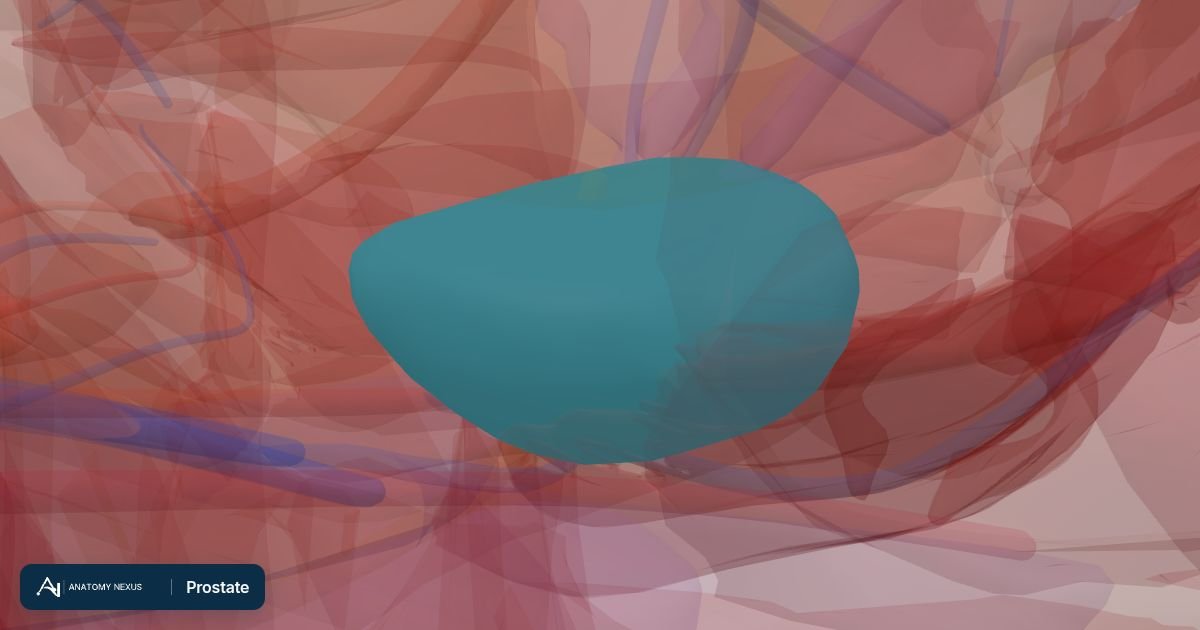
About
A walnut-sized gland surrounding the first part of the urethra below the bladder.
Function. Secretes fluid that makes up about a third of semen.
Clinical note. Benign enlargement slows the urinary stream in older men; prostate cancer is among the commonest male cancers. The prostate is kept in vaginoplasty, so prostate care still applies to trans women.
Structures in the atlas 1
The modelled pieces that make up the prostate in the 3D atlas. Each opens in the explorer.
The reproductive in brief
The reproductive system makes gametes and sex hormones and carries, delivers and feeds a pregnancy. On the female side the ovaries release an egg each cycle and make oestrogen and progesterone; the fallopian tubes carry the egg to the uterus, whose lining is shed each month as a period or supports a pregnancy; the cervix, vagina and vulva form the birth canal and external genitalia; and the breasts make milk. On the male side the testes produce sperm and testosterone, the epididymis and deferent ducts store and carry sperm, the seminal vesicles and prostate add most of the seminal fluid, and the erectile bodies of the penis deliver it. BodyParts3D, the dataset behind the 3D atlas, was built from one adult male, so this system holds the male organs. The female organs and the breasts are modelled from the NIH Human Reference Atlas and fitted into the same pelvis and chest as the Female reproductive layer, and the surgically constructed anatomy of gender-affirming surgery (neovagina, neophallus) is drawn schematically in the Vaginoplasty and Phalloplasty layers; all three are hidden by default and switch on from the systems list.