Explore the Human Body. Understand Medicine.
Interactive 3D anatomy connected to physiology, symptoms, medical conditions, tests, imaging, procedures, medications and learning resources. Every page names the organs and structures it concerns, so you can move from a symptom to the anatomy behind it, to the condition, the test and the treatment.
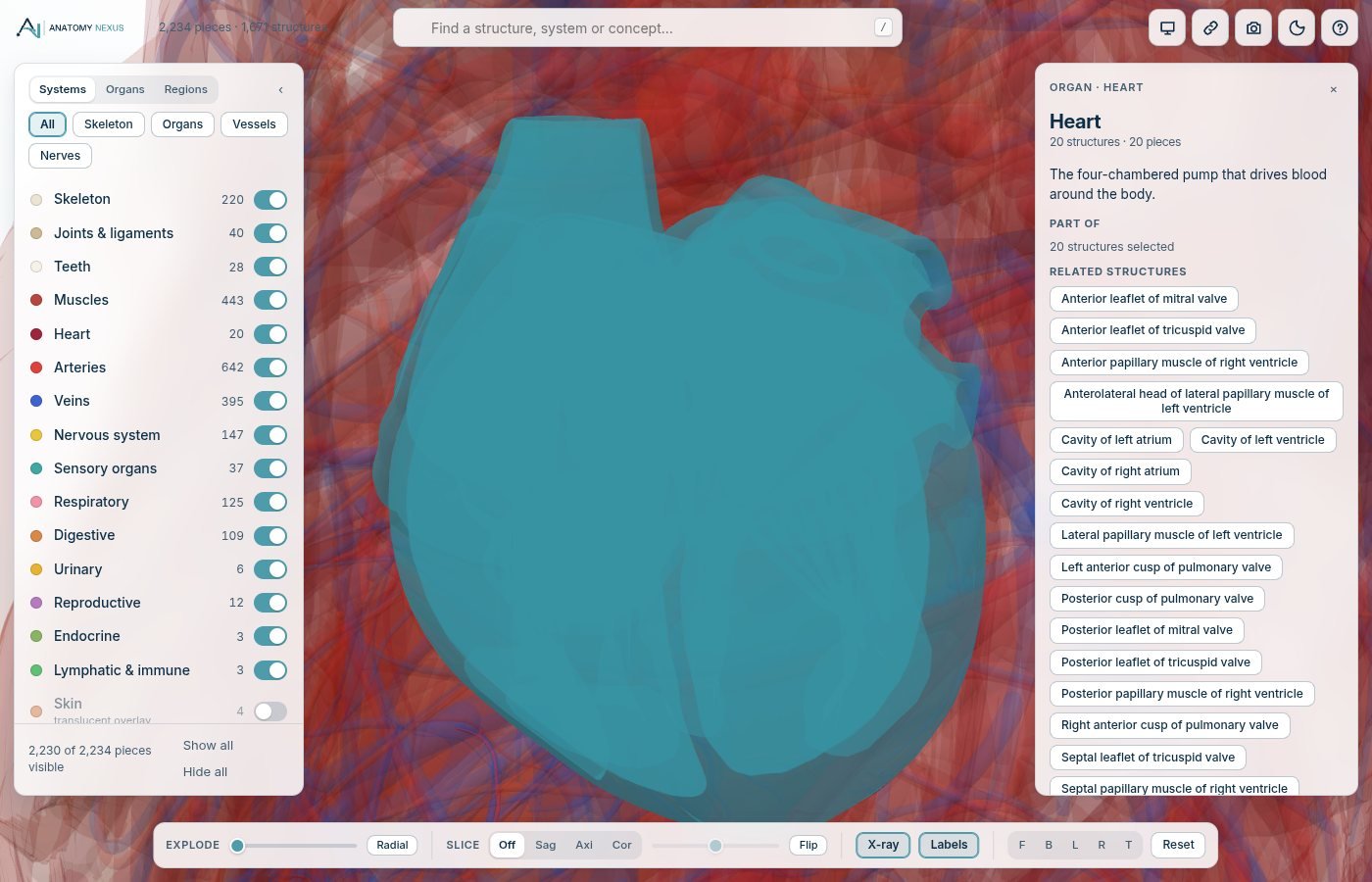
Start from the body
3D anatomy explorer
Orbit, click and search every one of 2,234 pieces. Toggle systems, isolate organs, slice the body on three planes, explode it into parts.
Organs & structures
39 anatomy pages: location, structure, blood supply, function and clinical relevance, each with a 3D model.
Body systems
Sixteen system pages with overviews, functions, clinical notes, every modelled structure and the topics that concern them.
Physiology
30 topics on how the body works: the cardiac cycle, gas exchange, nerve signals, digestion, kidney filtration and hormone control.
Medical terminology
149 terms: directions, planes, movements, regions, word parts, disease processes and clinical terms, each linked into the atlas.
Quizzes, flashcards & viva
Identify or locate highlighted structures in 3D, flip through flashcards, and test terminology, conditions, tests and medications.
Popular pages
A few of the most-asked-about entities, each written to the same template: what it is, where it sits, why it matters, what it connects to, how to explore it further and which sources support it.
Then follow the links into medicine
Every clinical page names the organs and structures it concerns, so a knee pain page leads to the femur, tibia and menisci in 3D, to osteoarthritis, to the X-ray and MRI that show it, to knee replacement and to the painkillers used.
Symptoms 18
Start from what a person feels: the anatomy involved, common and less common causes, and when to seek urgent care.
Conditions 40
Diseases and conditions: definition, affected anatomy, causes, symptoms, diagnosis, treatment and prevention.
Medical tests 31
Blood, urine, heart and lung tests: what they measure, how they are done and how results are read.
Biomarkers 30
The substances tests measure: what each is, which organ makes or clears it, why a result may be higher or lower and what distorts it.
Imaging 7
X-ray, CT, MRI, ultrasound, PET, mammography and fluoroscopy: how each works and what it shows.
Procedures 14
Operations and procedures step by step, with the anatomy involved, recovery and risks.
Medications 28
How common medicines work in the body, what they are for and what to watch for. Education, not prescribing.
Drug classes 24
Families of medicines that share a mechanism: what they target in the body, which conditions they treat and their members.
Drug targets 22
The receptors, enzymes, channels and pathways medicines act on: what each does in the body, where it is found and which medicines change it.
Everyday and emergency knowledge
First aid 16
CPR, choking, bleeding, burns, fractures, fainting, seizures and more, aligned with resuscitation guidelines.
Health 7
Exercise, sleep, nutrition, weight, smoking, alcohol and hydration, explained through the organs they act on.
Drug Interaction Checker
Add two or more medicines, brands or combination products and see what the official sources say about each pair: severity, mechanism, management and monitoring, never a bare "safe".
Comparisons
CRP vs ESR, creatinine vs eGFR, ECG vs echocardiogram, CT vs MRI, TSH vs free T4, HbA1c vs glucose, atorvastatin vs rosuvastatin: what each is for and how they differ.
Search everything
One search across structures, organs, systems, terms and every clinical topic, with results that link straight into the 3D atlas.