



The cardiac cycle
One heartbeat is a sequence of filling and ejection: diastole, when the ventricles relax and fill, and systole, when they contract and pump.
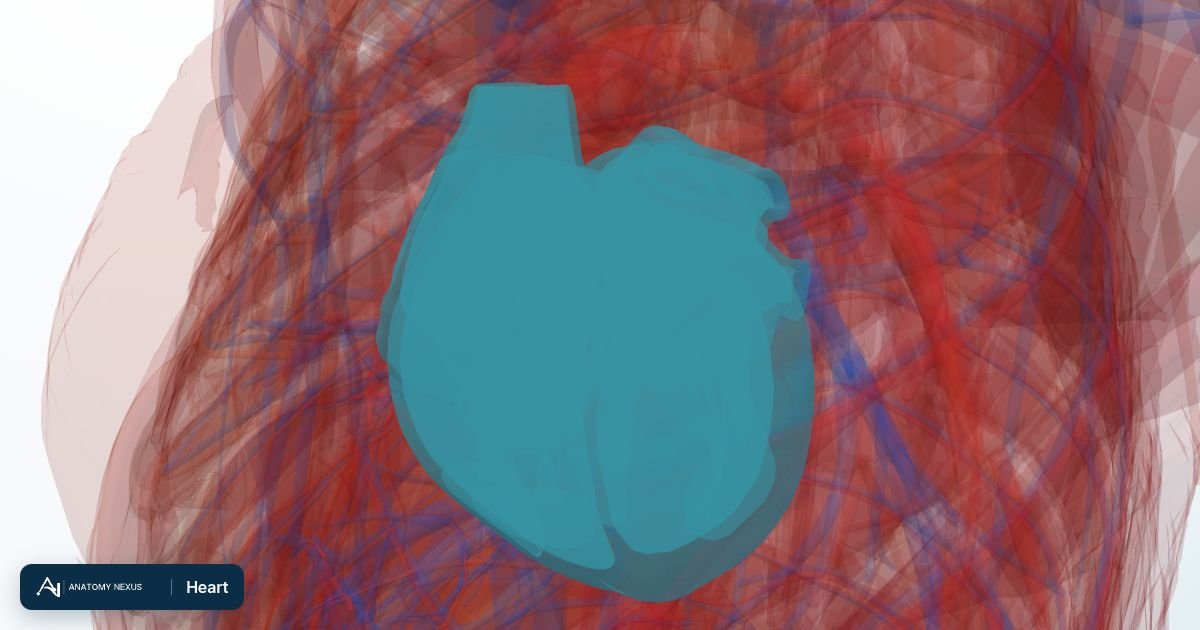
Each cycle lasts about 0.8 seconds at rest. During diastole the mitral and tricuspid valves are open and blood flows passively from the atria into the ventricles; the atria then contract to add the final fifth. Ventricular systole begins as pressure rises, the mitral and tricuspid valves snap shut (the first heart sound, 'lub'), and once ventricular pressure exceeds aortic pressure the aortic and pulmonary valves open and blood is ejected.
As the ventricles relax, pressure falls, the aortic and pulmonary valves close (the second heart sound, 'dub') and the cycle repeats. The valves make flow one-way; the papillary muscles and chordae tendineae stop the mitral and tricuspid leaflets bulging back into the atria.
The fraction of the end-diastolic volume that is ejected, the ejection fraction, is normally 55 to 70% and is the everyday measure of how well the left ventricle pumps.
Key facts
| Fact | Value |
|---|---|
| Cycle length at 75 beats/min | 0.8 s |
| Ejection fraction (normal) | 55–70% |
| Stroke volume at rest | ≈70 ml |