



Physiology topic · Heart
Cardiac output
The volume of blood the heart pumps per minute: heart rate multiplied by stroke volume, about five litres at rest.
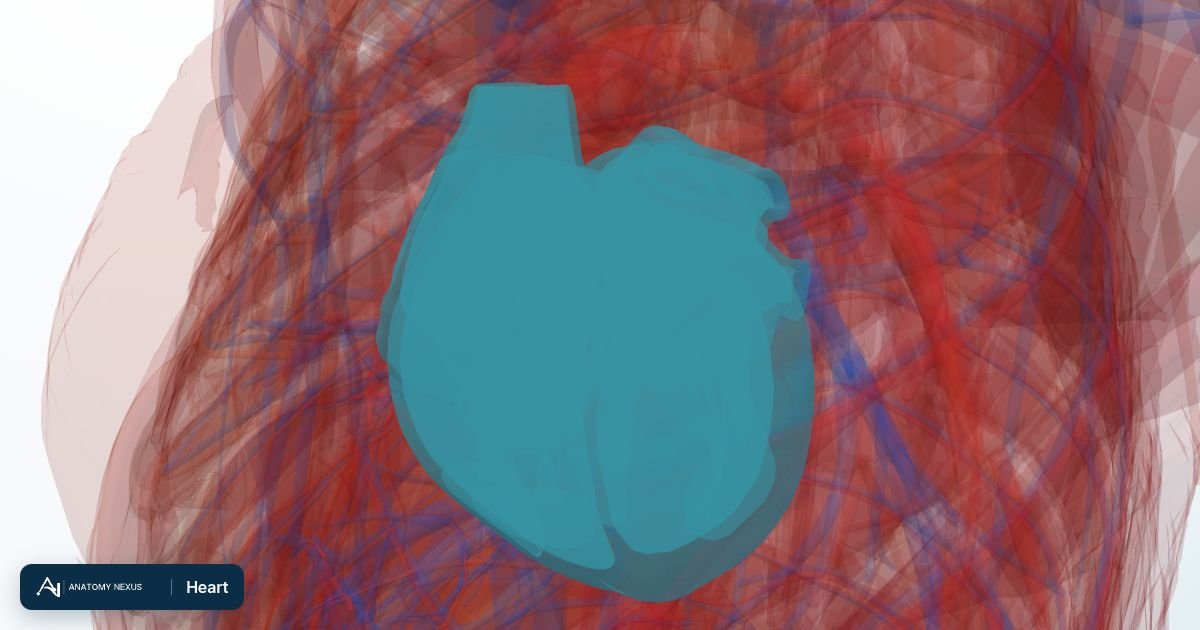
Stroke volume, the amount ejected per beat, rises when the ventricle fills more (the Frank-Starling mechanism: a more stretched muscle contracts harder), when contractility increases under sympathetic drive, and when the resistance it pumps against falls.
During hard exercise cardiac output can reach 20 to 25 litres per minute in a fit adult, mostly through a faster rate and a larger stroke volume, while blood is redirected from the gut and kidneys to the muscles.
A failing heart cannot raise its output to meet demand; the resulting breathlessness on exertion and fluid retention are the hallmarks of heart failure.
Key facts
| Fact | Value |
|---|---|
| Resting cardiac output | ≈5 L/min |
| During maximal exercise | 20–25 L/min |
| Formula | HR × stroke volume |