



Circulation
Two circuits in series: the pulmonary circulation loads blood with oxygen in the lungs, the systemic circulation delivers it to every organ.
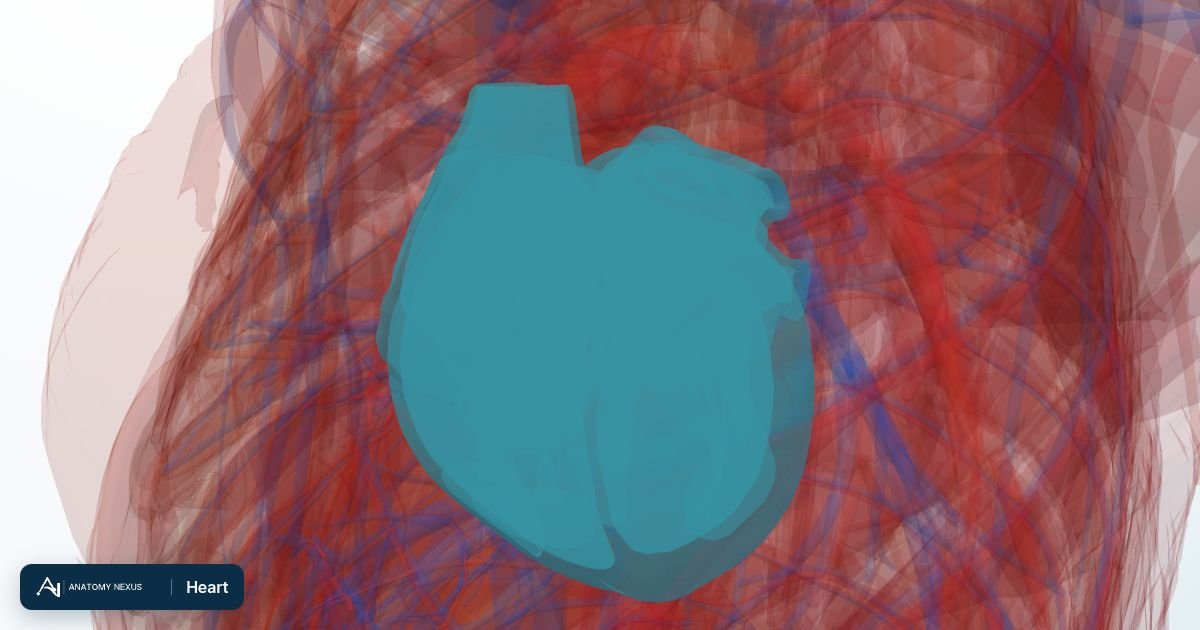
The right heart pumps deoxygenated blood through the pulmonary arteries into the lungs, where it picks up oxygen and unloads carbon dioxide before returning through the pulmonary veins to the left atrium. The left heart pumps it into the aorta and on through arteries, arterioles and capillaries, where exchange with the tissues happens, then back through venules and veins to the right atrium.
Pressure falls along the way: from about 120 mmHg in the aorta to a few mmHg in the great veins. Veins hold about two thirds of the blood volume at any moment and return it to the heart with the help of valves, the muscle pump of the legs and the suction of breathing.
Special circuits exist: the hepatic portal system carries gut blood through the liver first, and the coronary circulation supplies the heart muscle itself during diastole.
Key facts
| Fact | Value |
|---|---|
| Blood volume (adult) | ≈5 L |
| Share held in veins | ≈65% |
| Full circuit time at rest | ≈1 min |