



Gas exchange
Oxygen and carbon dioxide cross the thin wall between alveoli and capillaries by diffusion, driven by differences in partial pressure.
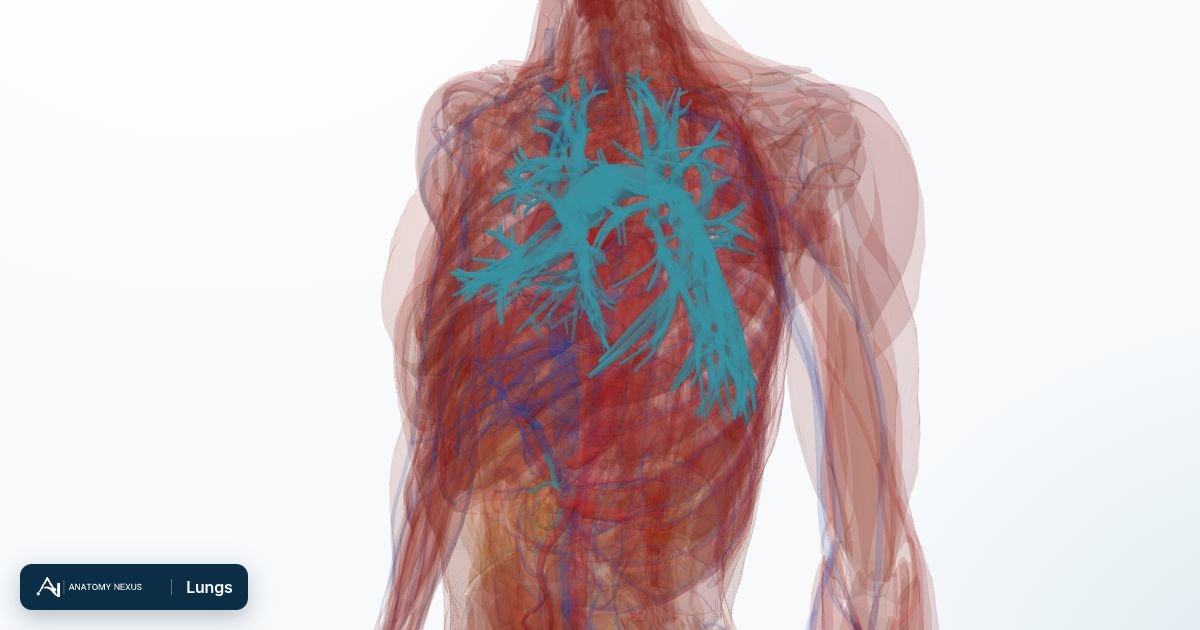
The lungs contain about 300 million alveoli with a combined surface close to the size of a tennis court, separated from blood by a membrane under a micrometre thick. Oxygen diffuses into the blood because its partial pressure in alveolar air (about 100 mmHg) exceeds that in returning venous blood (about 40 mmHg); carbon dioxide moves the other way down a smaller gradient because it diffuses twenty times more readily.
Efficient exchange needs ventilation and blood flow to be matched. Blood sent to unventilated alveoli (as in pneumonia) is not oxygenated, and ventilated alveoli without blood flow (as in pulmonary embolism) are wasted breath. The lungs partly correct this by constricting vessels in poorly ventilated regions.
Thickening of the membrane (fibrosis) or fluid in the alveoli (pulmonary oedema) slows diffusion, and oxygen, with its lower solubility, is affected first.
Key facts
| Fact | Value |
|---|---|
| Alveoli | ≈300 million |
| Exchange surface | ≈70 m² |
| Alveolar oxygen partial pressure | ≈100 mmHg |