



Breathing (ventilation)
Air moves in and out because muscles change the volume of the chest: the diaphragm and external intercostals enlarge it for inspiration; relaxation and elastic recoil empty it.
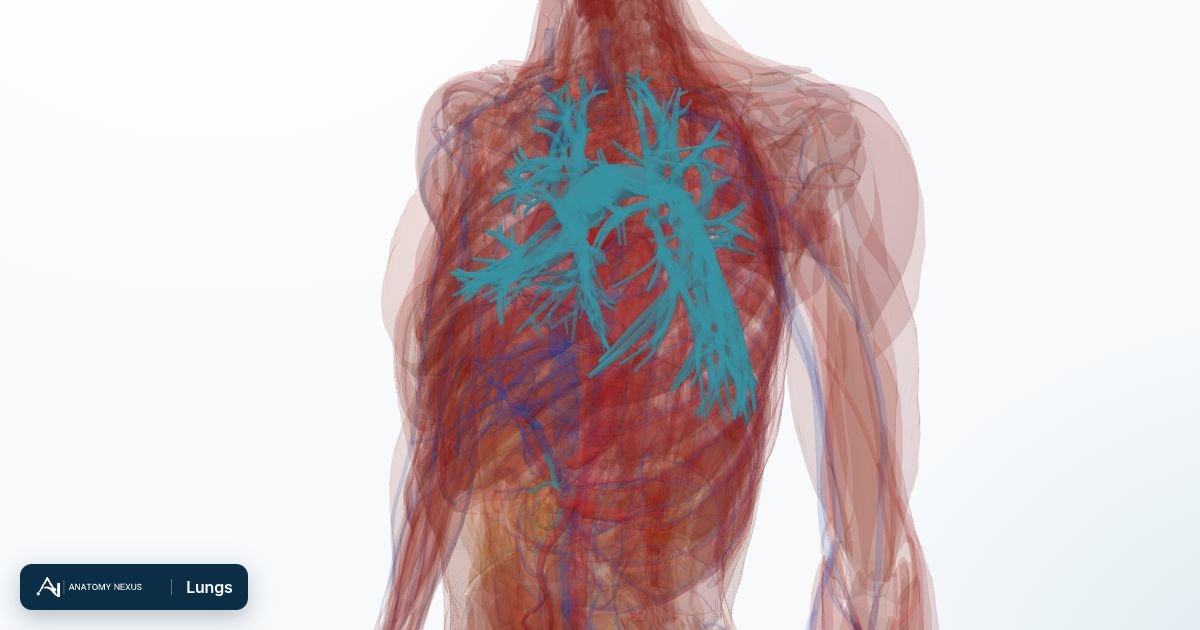
When the diaphragm contracts its dome flattens and the ribs swing up and out, lowering pressure inside the chest below atmospheric pressure so air flows in. Quiet expiration is passive: the stretched lungs and chest wall recoil. Forced breathing recruits the abdominal muscles and internal intercostals to push air out, and the scalenes and sternocleidomastoids to pull the ribs up.
The rhythm is generated in the medulla and pons and adjusted by chemoreceptors that sense carbon dioxide and, to a lesser extent, oxygen. A rising carbon dioxide level is the strongest normal drive to breathe.
Airway resistance matters: narrowing the bronchi even slightly, as in asthma, greatly increases the work of breathing because resistance rises with the fourth power of the reduction in radius.
Key facts
| Fact | Value |
|---|---|
| Resting breathing rate | 12–20 /min |
| Tidal volume | ≈500 ml |
| Minute ventilation at rest | ≈6 L/min |