



Heart rate
How often the heart beats, set by the sinoatrial node and adjusted second by second by the autonomic nervous system and hormones.
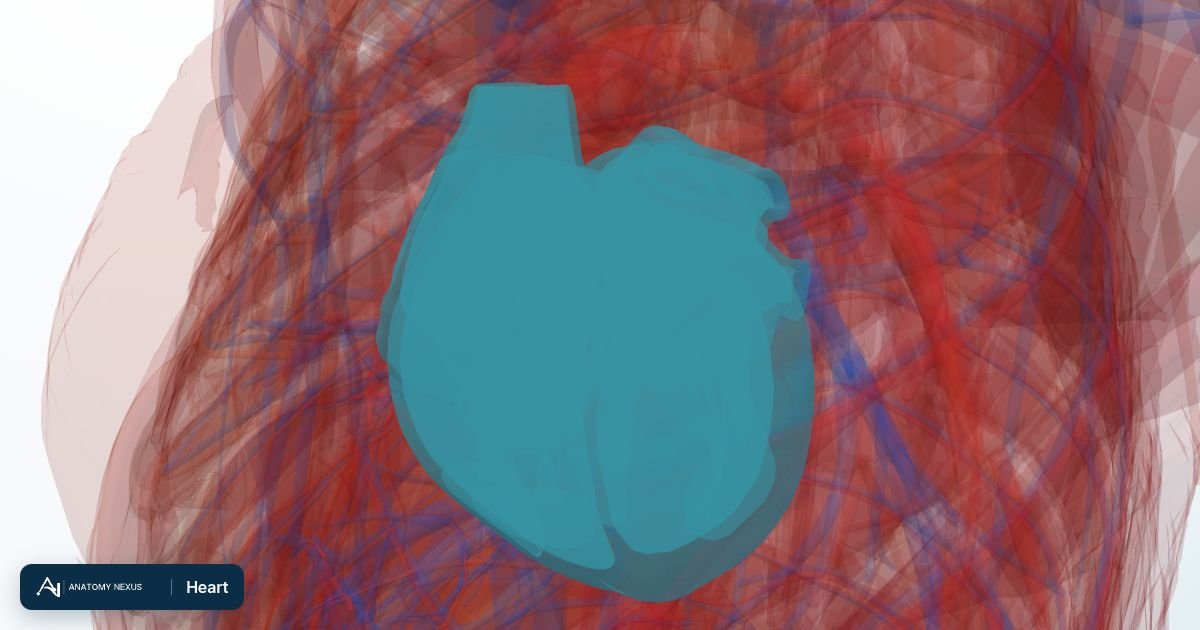
The sinoatrial node in the wall of the right atrium fires spontaneously about 100 times a minute if left alone. At rest the vagus nerve slows it to a typical 60 to 100 beats per minute; sympathetic nerves and adrenaline speed it up during exercise, fear or fever.
Trained athletes often have resting rates in the 40s because each beat pumps more blood. Rates persistently above 100 (tachycardia) or below 60 (bradycardia) are only abnormal in context: a rate of 45 in a marathon runner is normal, in a fainting older adult it may signal heart block.
Heart rate is one of the vital signs and is measured at the radial pulse, on an ECG, or by pulse oximeters and wearables.
Key facts
| Fact | Value |
|---|---|
| Normal resting rate | 60–100 /min |
| Maximum rate (rough) | 220 − age |
| Intrinsic sinoatrial rate | ≈100 /min |