



Testosterone
Also known as: total testosterone, free testosterone, serum testosterone, androgen level
The principal androgen, made mainly by the testes and in smaller amounts by the ovaries and adrenal glands. Its blood level is measured to investigate suspected hypogonadism in men and hyperandrogenism in women, and to guide and monitor testosterone treatment and gender-affirming hormone therapy.
- Also known as
- total testosterone, free testosterone, serum testosterone, androgen level
- Units
- nmol/L in the UK, ng/dL in the United States (1 nmol/L is about 29 ng/dL)
- Measured by
- Hormone tests
What it is and what it does
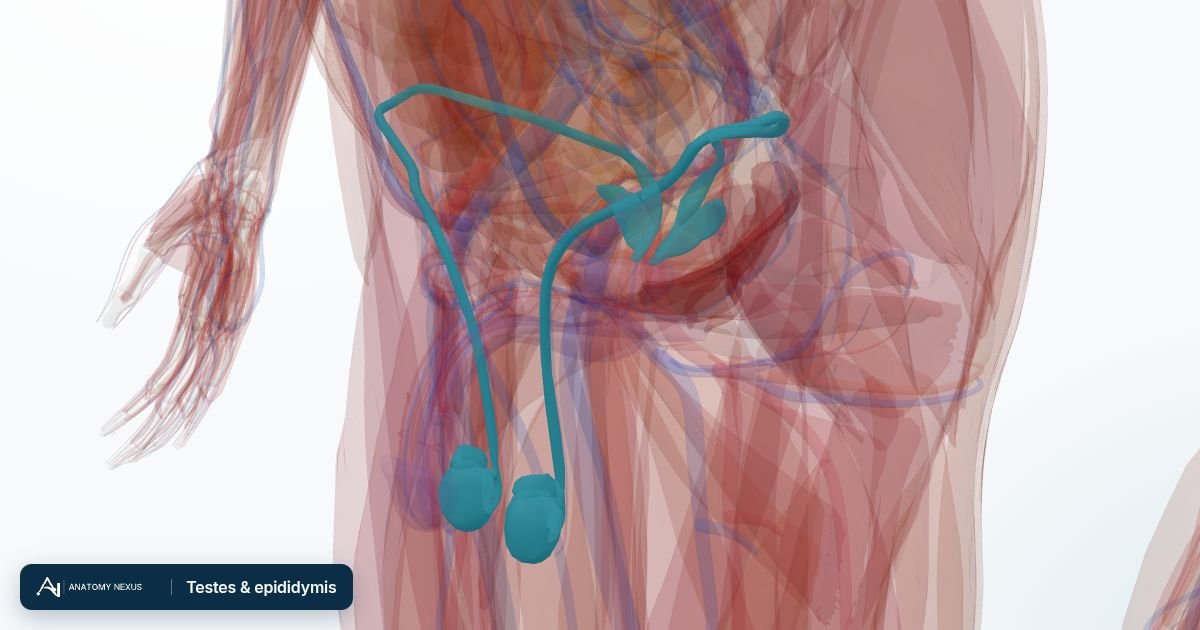
In the testes, Leydig cells make testosterone under the control of luteinising hormone (LH) from the pituitary, which is itself driven by pulses of GnRH from the hypothalamus; testosterone, and the oestradiol made from it, feed back to restrain LH and FSH. In women the hormone comes from the ovaries, the adrenal glands and the conversion of adrenal precursors in fat and skin, at a small fraction of the male level. Most testosterone in blood is tightly bound to sex hormone-binding globulin (SHBG); the rest is loosely bound to albumin or free, and it is this free and albumin-bound (bioavailable) fraction that reaches tissues, so laboratories report total testosterone and add a free, calculated free or bioavailable value when SHBG is likely to be abnormal. Some target tissues convert it to the more potent dihydrotestosterone (DHT) by 5-alpha-reductase, and fat and other tissues convert some to oestradiol by aromatase. The level is highest in the early morning and falls through the day, so a morning sample is standard, and a low result is repeated before hypogonadism is diagnosed. In gender-affirming care the level shows whether treatment has brought testosterone into the reference range of the affirmed gender, and in a person on testosterone it is read together with the haematocrit.
Why it may be higher
- Polycystic ovary syndrome, the commonest cause of a mildly raised level in women
- Congenital adrenal hyperplasia and androgen-secreting tumours of the ovary or adrenal gland, suspected when the rise is marked or rapid and comes with virilisation
- Testosterone treatment and misuse of testosterone preparations (other anabolic steroids suppress the body's own testosterone and can give a low result)
- Masculinising hormone therapy in trans men and non-binary people, where the aim is a level within the male reference range
- Raised sex hormone-binding globulin, as in hyperthyroidism, pregnancy or oestrogen replacement therapy, which raises the total level while the free fraction is unchanged or lower (combined hormonal contraception raises SHBG but lowers both total and free testosterone)
Why it may be lower
- Primary hypogonadism: failure of the testes themselves from Klinefelter syndrome, undescended testes, mumps orchitis, chemotherapy, radiotherapy or injury, with high LH and FSH
- Secondary hypogonadism: disease of the pituitary or hypothalamus, including tumours, high prolactin and iron overload, with LH and FSH low or inappropriately normal
- Ageing, obesity, type 2 diabetes, long-term illness and obstructive sleep apnoea
- Opioids, glucocorticoids, GnRH analogues and anti-androgens such as cyproterone acetate (receptor-blocking anti-androgens such as bicalutamide can instead raise the measured level)
- Removal of the testes (orchidectomy), including as part of vaginoplasty, after which anti-androgen treatment is usually stopped by the specialist team; and removal of the ovaries in people not taking testosterone
- Feminising hormone therapy in trans women and non-binary people, where oestradiol with an anti-androgen or GnRH analogue is used to bring the level into the female reference range
A high or low value can be associated with several different situations. The result is interpreted with other results, symptoms, history and clinical findings.
What can affect the result
- Time of day: the level peaks in the early morning and falls through the day, so a fasting morning sample is standard and a low result is repeated before hypogonadism is diagnosed
- SHBG: total testosterone rises and falls with the binding protein, which is raised by oestrogen, thyroid excess, ageing and liver disease and lowered by obesity and insulin resistance, so a free or calculated free value may be needed
- Acute illness, short sleep and a recent meal can lower the level temporarily
- Assay: immunoassays are less accurate at the low levels found in women, children and trans women on treatment, where mass spectrometry is preferred
- In people on treatment, the timing of the sample relative to the last injection or gel application
Medicines that can change it
Each medicine page lists its effect on this marker under "Effects on tests and results", with the source.