



Gallbladder & bile ducts anatomy
Also known as: gall bladder, bile duct, biliary
Stores and concentrates bile, releasing it into the duodenum through the cystic and common bile ducts.
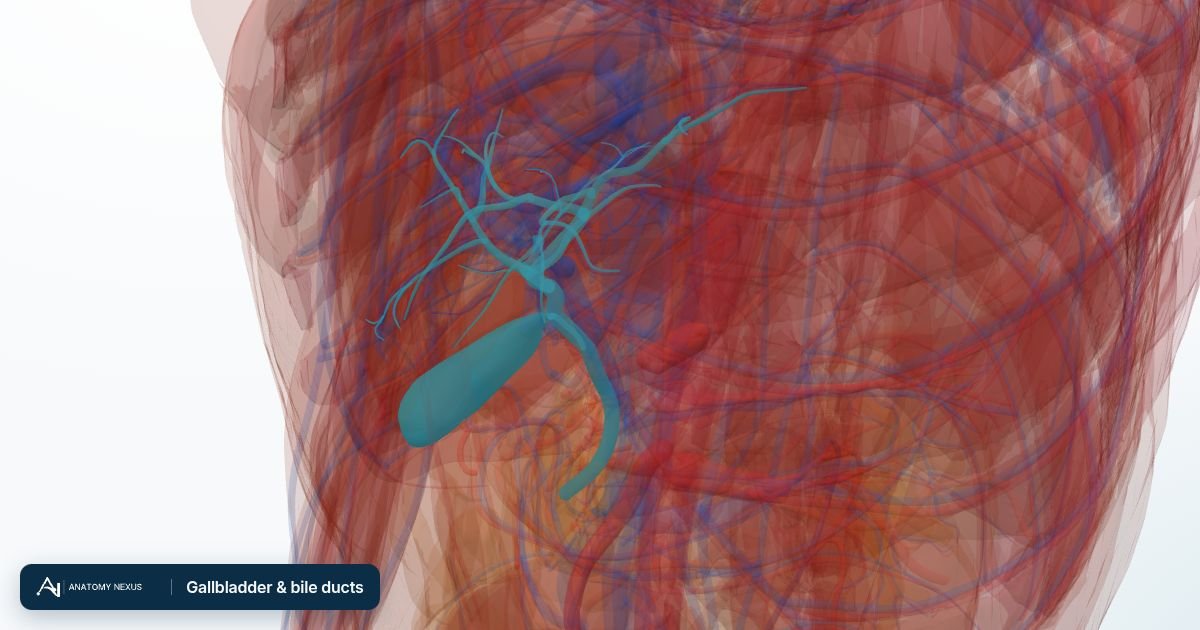
Structures in the atlas 14
The modelled pieces that make up the gallbladder & bile ducts in the 3D atlas. Each opens in the explorer.
- Anterior inferior tributary of right hepatic biliary tree
- Anterior superior tributary of right hepatic biliary tree
- Caudate lobe tributary of left hepatic biliary tree
- Common hepatic duct
- Cystic duct
- Gallbladder
- Lateral inferior tributary of left hepatic biliary tree
- Lateral superior tributary of left hepatic biliary tree · 2 pieces
- Left hepatic duct
- Medial inferior tributary of left hepatic biliary tree
- Medial superior tributary of left hepatic biliary tree · 2 pieces
- Posterior inferior tributary of right hepatic biliary tree
- Posterior superior tributary of right hepatic biliary tree · 2 pieces
- Right hepatic duct
The digestive in brief
The digestive tract is a nine-metre tube from mouth to anus. Food is chewed, swallowed down the oesophagus, churned with acid in the stomach, digested and absorbed along the small intestine (duodenum, jejunum, ileum), and its residue concentrated in the colon. The liver, gallbladder and pancreas pour bile and enzymes into the duodenum. The model includes the tongue, salivary glands and gums, the stomach and intestines in many segments, the liver as eight hepatovenous segments with its bile ducts, the gallbladder, the pancreas and the mesenteries that suspend the gut.