



The major endocrine glands
Pituitary, thyroid, parathyroids, adrenals, pancreatic islets, gonads and pineal each make a signature set of hormones; several other organs, including the heart, kidneys, gut and fat, make hormones too.
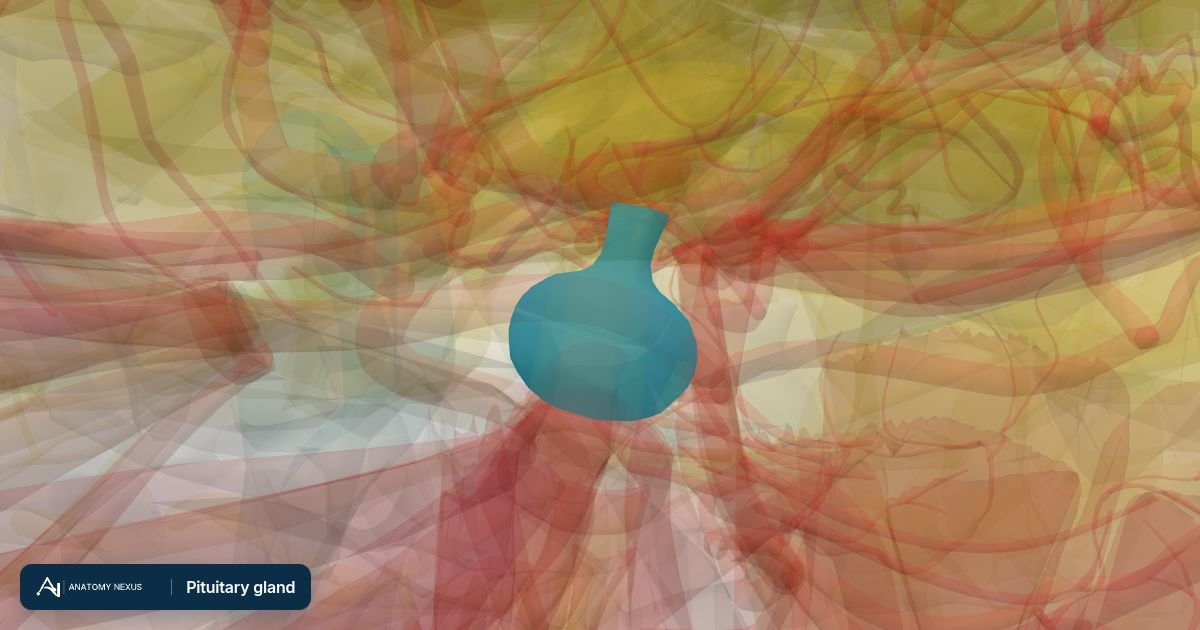
The pituitary controls growth, thyroid and adrenal function, reproduction, milk production and water balance. The thyroid sets the metabolic rate through thyroxine; the four parathyroids behind it raise blood calcium. The adrenal cortex makes cortisol (stress and glucose), aldosterone (salt and blood pressure) and androgens; its medulla makes adrenaline. The islets of the pancreas make insulin and glucagon; the testes make testosterone and the ovaries oestrogen and progesterone; the pineal makes melatonin.
Less famous sources matter clinically: the heart releases natriuretic peptides when stretched (used to diagnose heart failure), the kidneys release erythropoietin to make red cells, the gut makes incretins that boost insulin, and fat tissue makes leptin, which signals energy stores to the brain.
In this atlas the pituitary and adrenal glands are modelled; the thyroid and parathyroids are not part of the dataset.
Key facts
| Fact | Value |
|---|---|
| Thyroid mass | ≈20 g |
| Adrenal mass (each) | ≈4–5 g |
| Pituitary mass | ≈0.5 g |