



Hormone regulation: the hypothalamic-pituitary axis
The hypothalamus tells the pituitary, the pituitary tells the glands, and the glands' hormones report back: a chain of command that links the brain to the endocrine system.
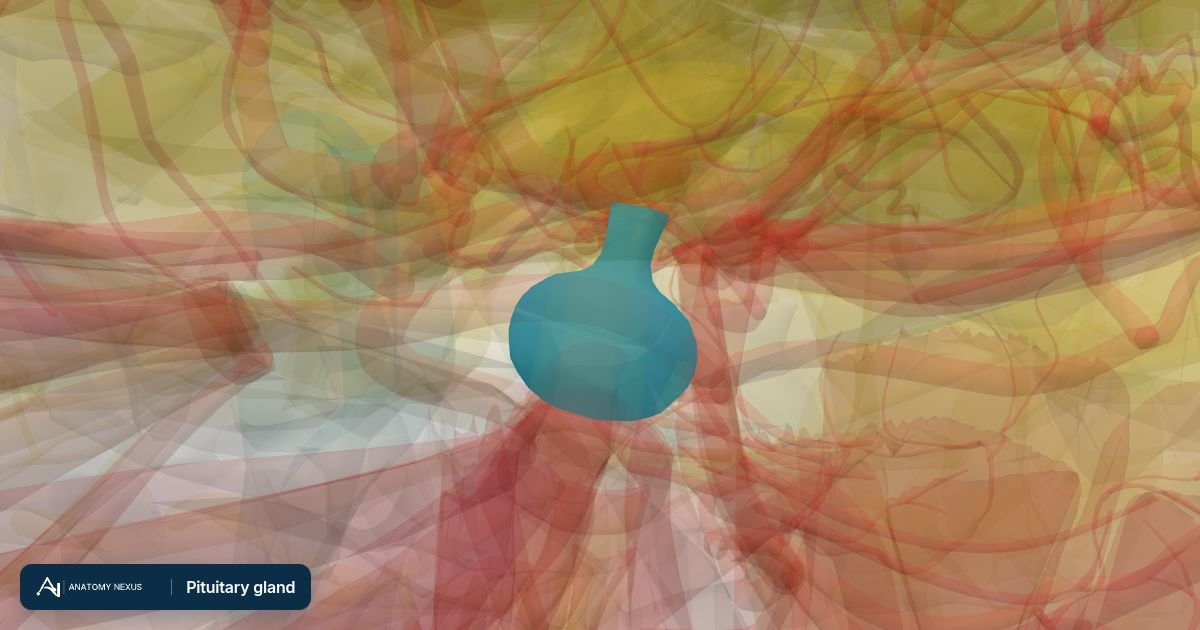
Releasing hormones from the hypothalamus travel down a private portal system to the anterior pituitary, which secretes the tropic hormones: thyroid-stimulating hormone, adrenocorticotropic hormone, the gonadotropins, growth hormone and prolactin. The posterior pituitary stores two hormones made in the hypothalamus itself, antidiuretic hormone and oxytocin.
Each axis is a loop: for the thyroid, TRH drives TSH, TSH drives thyroxine, and thyroxine suppresses both. So a failing thyroid produces a high TSH, while a pituitary problem produces low TSH with low thyroxine; the pair of results tells you where the fault lies.
Stress, sleep, light and season act on the hypothalamus, which is why cortisol peaks in the early morning, growth hormone surges in deep sleep and the menstrual cycle can stop under severe stress.
Key facts
| Fact | Value |
|---|---|
| Anterior pituitary hormones | 6 major |
| Cortisol peak | early morning |
| TSH reference range | ≈0.4–4 mU/L |