



The menstrual cycle
A roughly monthly cycle in which one ovary matures and releases an egg while the uterus builds a lining and then sheds it as a period if no pregnancy follows, timed throughout by hormones.
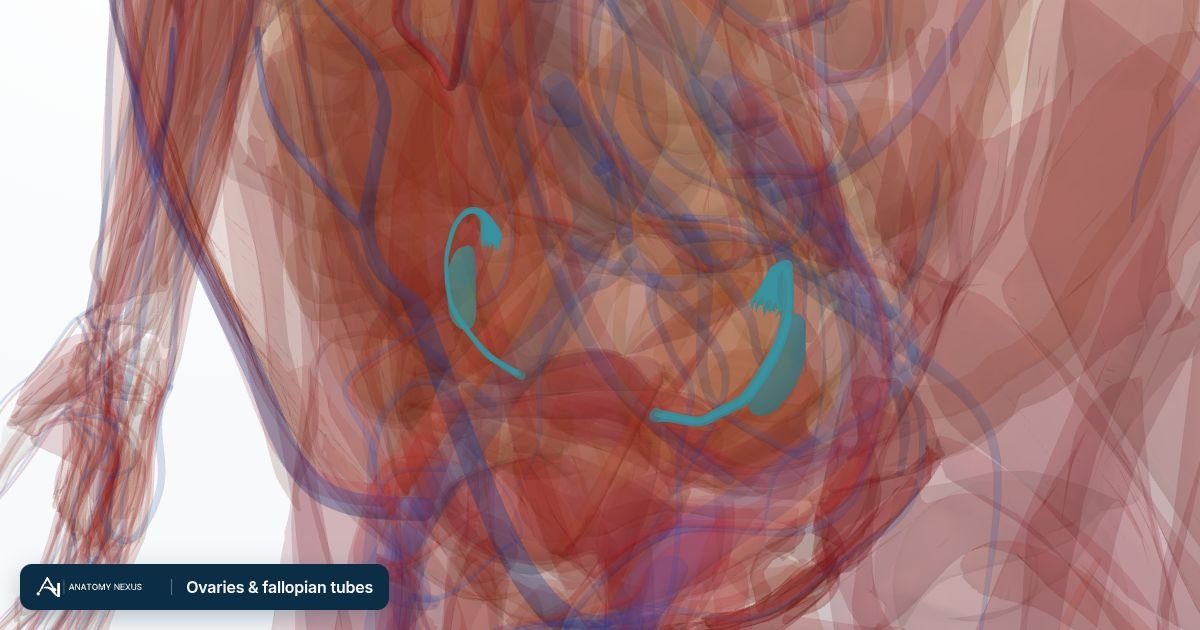
The menstrual cycle is the roughly monthly sequence in which one ovary matures and releases an egg while the uterus prepares a lining and then sheds it if no pregnancy occurs. Day 1 is the first day of bleeding, and the average cycle is about 28 days: the NHS counts anything from 21 to 40 days as normal as long as the pattern is regular for that person. Two cycles run in step, one in the ovary and one in the uterus, and both are driven by the hypothalamic-pituitary-ovarian axis: the hypothalamus releases gonadotrophin-releasing hormone (GnRH) in pulses, the pituitary answers with follicle-stimulating hormone (FSH) and luteinising hormone (LH), and the ovary with oestradiol, progesterone and inhibin, which feed back on both.
In the follicular phase the FSH rise that follows the hormone fall at the end of the previous cycle recruits a group of follicles, whose granulosa cells make oestradiol; rising oestradiol and inhibin then suppress FSH, so only the most sensitive follicle survives. When oestradiol stays high for a couple of days the feedback turns positive, the pituitary releases a surge of LH and the follicle ruptures about a day later: ovulation, around day 14 of a 28-day cycle. The emptied follicle becomes the corpus luteum, which makes progesterone for a fairly constant 14 days, so differences in cycle length come mostly from the follicular phase. Without fertilisation it degenerates and both hormones fall; if an embryo implants, its human chorionic gonadotropin (hCG) keeps it working, so a missed period is often the first sign of pregnancy.
The uterus follows the ovary. Falling progesterone constricts the spiral arteries of the endometrium, so the functional layer becomes ischaemic and is shed as the menstrual flow, usually over about 5 days, with 3 to 8 days counted as normal; bleeding that interferes with daily life counts as heavy, whatever the measured volume. Oestradiol then regrows the lining from the basal layer through the proliferative phase and makes the cervical mucus clear and stretchy at ovulation. In the secretory phase progesterone makes the glands secrete glycogen-rich fluid ready for implantation, thickens the mucus again and raises the basal body temperature slightly. Period pain comes from prostaglandins released by the shedding lining, which make the myometrium contract.
Not every cycle is ovulatory: anovulatory cycles are common in the first year or two after the first period (menarche) and again in the perimenopause, and are often irregular and sometimes heavy, because oestradiol builds the lining with no progesterone to stabilise it. Hormonal contraception acts on the same axis: combined methods suppress the LH surge so that no follicle ovulates, and the bleed in the hormone-free interval is a withdrawal bleed rather than a true period, while progestogen-only methods thicken the cervical mucus and thin the lining, and some also stop ovulation. Testosterone taken by trans men and non-binary people usually stops periods within a few months, but it is not contraception, and bleeding that returns needs assessment.
Key facts
| Fact | Value |
|---|---|
| Cycle length | about 28 days; regular cycles of 21–40 days are normal |
| Ovulation | around day 14 of a 28-day cycle, about a day after the LH surge |
| Luteal phase | about 14 days, fairly constant |
| Bleeding | usually about 5 days; average loss 30–40 mL |
| Heavy menstrual bleeding | bleeding that interferes with daily life; 80 mL or more per period is the older research definition |