



Pancreatic functions
One organ, two jobs: exocrine cells pour digestive enzymes and bicarbonate into the duodenum; the islets of Langerhans release insulin and glucagon into the blood.
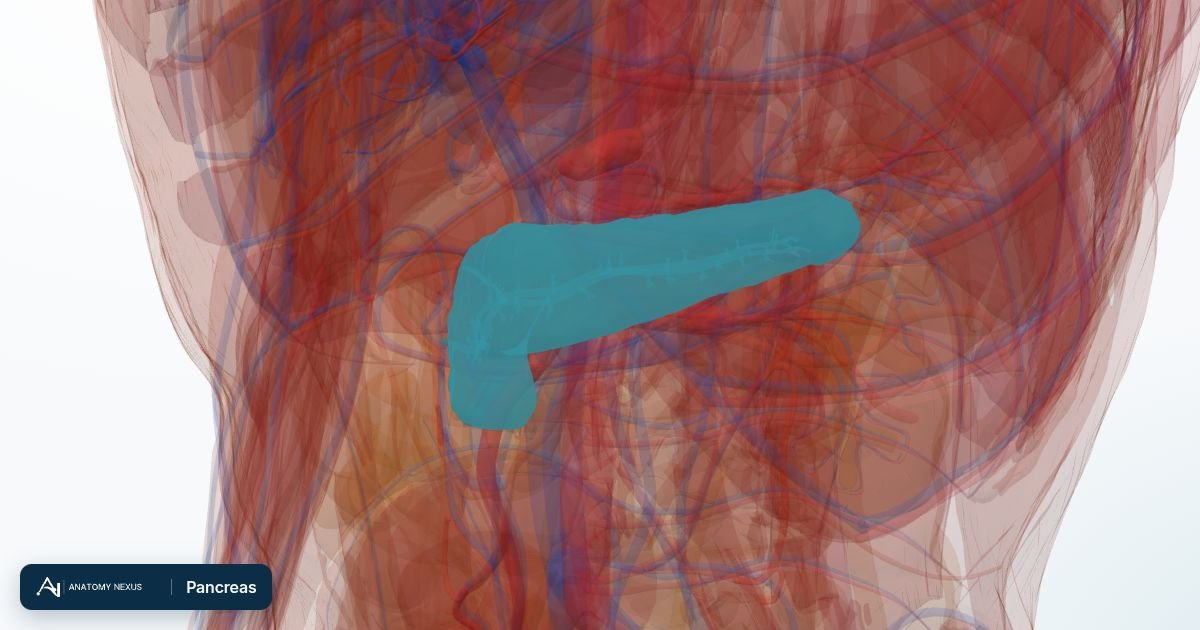
About 1.5 litres of alkaline pancreatic juice a day neutralises stomach acid and delivers lipase, amylase and the protein-digesting enzymes, which are secreted as inactive precursors and switched on only in the gut so the pancreas does not digest itself. When that safeguard fails, the result is pancreatitis.
The islets sense blood glucose directly. After a meal beta cells release insulin, which tells muscle, fat and liver to take up and store glucose; between meals alpha cells release glucagon, which makes the liver release it again. This pair holds blood glucose within a narrow band around 4 to 7 mmol/L.
Type 1 diabetes destroys the beta cells; type 2 diabetes is mainly resistance to insulin's signal with a gradual failure of the beta cells to compensate.
Key facts
| Fact | Value |
|---|---|
| Pancreatic juice | ≈1.5 L/day |
| Fasting blood glucose | 4–6 mmol/L (70–110 mg/dL) |
| Islets | ≈1 million |