



Phalloplasty and metoidioplasty
Also known as: metoidioplasty, radial forearm free flap phalloplasty, anterolateral thigh phalloplasty, genital reconstruction surgery, lower surgery
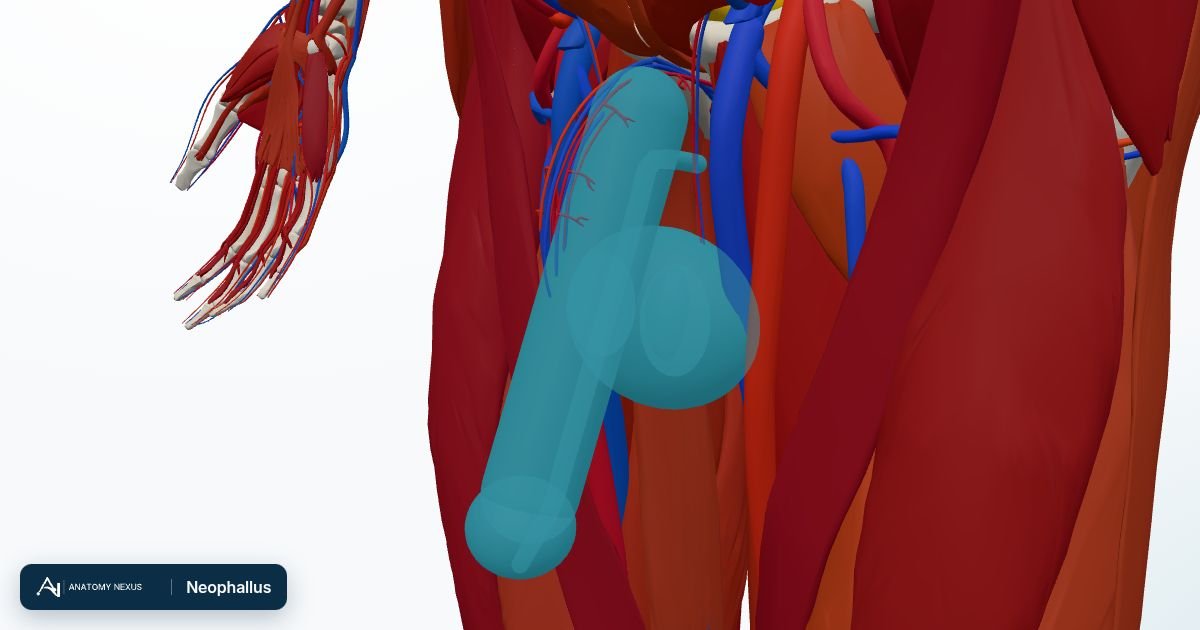
Construction of a penis, most often as gender-affirming surgery for trans men and some non-binary people assigned female at birth, and occasionally after loss of the penis to injury or cancer. Phalloplasty builds a phallus from a flap of skin, fat and fascia moved with its own artery, veins and nerves, usually from the forearm or thigh, in a series of operations that can add a lengthened urethra, a glans, a scrotum with testicular implants and, later, an erectile device. Metoidioplasty instead releases the clitoris, enlarged by testosterone, to stand free as a small phallus in a single operation, with or without urethral lengthening. Gender incongruence is not a mental illness: the World Health Organization classifies it under conditions related to sexual health, and genital surgery is one option that some, not all, trans men choose.
What it is
Construction of a penis, most often as gender-affirming surgery for trans men and some non-binary people assigned female at birth, and occasionally after loss of the penis to injury or cancer. Phalloplasty builds a phallus from a flap of skin, fat and fascia moved with its own artery, veins and nerves, usually from the forearm or thigh, in a series of operations that can add a lengthened urethra, a glans, a scrotum with testicular implants and, later, an erectile device. Metoidioplasty instead releases the clitoris, enlarged by testosterone, to stand free as a small phallus in a single operation, with or without urethral lengthening. Gender incongruence is not a mental illness: the World Health Organization classifies it under conditions related to sexual health, and genital surgery is one option that some, not all, trans men choose.
Why it is done
- Gender incongruence in trans men and some non-binary people who want male genital anatomy, standing urination or penetrative sex, after assessment under the WPATH Standards of Care
- Metoidioplasty for those who prefer a smaller operation with no distant donor site and natural sensation and erection, accepting a small phallus; urethral lengthening, if wanted, may still need a graft and further stages
- Phalloplasty for those who want a phallus of adult size that can later take an erectile implant
- Reconstruction after loss of the penis through trauma or cancer surgery
Before the procedure
- Assessment by a gender identity service following the WPATH Standards of Care, usually after a period of testosterone therapy, which enlarges the clitoris (essential for metoidioplasty) and is continued around surgery
- Discussion of fertility before any eggs are lost, with the option of storing eggs, because removal of the ovaries ends the supply of eggs and removal of the uterus ends the possibility of carrying a pregnancy; hysterectomy, with or without oophorectomy, and vaginectomy usually precede or accompany surgery when the urethra is lengthened
- Permanent hair removal from the strip of forearm or thigh skin that will line the urethra, over the preceding months
- Stopping smoking, which threatens flap survival; weight and diabetes optimised; the hand's circulation through the ulnar artery checked (Allen test, sometimes with Doppler ultrasound) before a forearm flap is planned
- Choice of donor site and staging agreed with the surgical team: forearm flap (thin and sensate, with a visible scar), thigh flap (thicker, with a hidden scar, often needing a separate urethral lining) or metoidioplasty
Step by step
- Hysterectomy (with or without oophorectomy) is usually done as an earlier operation; vaginectomy (removal of the vaginal lining and closure of the canal) is done at the stage when the urethra is lengthened, and a suprapubic catheter is placed to divert urine
- The flap is raised: on the forearm a rectangle of skin, fat and fascia with the radial artery, cephalic vein and antebrachial cutaneous nerves; on the thigh a flap on the descending branch of the lateral circumflex femoral artery, which can stay attached to its pedicle
- The flap is rolled into a 'tube within a tube': a narrow hair-free strip rolled skin-inward forms the urethra, and the wider outer tube forms the shaft
- The phallus is fixed to the pubic region and the clitoris, stripped of its surface skin, is buried at its base; in a free flap the radial artery and cephalic vein are joined under the microscope to the femoral or deep inferior epigastric vessels, and the flap nerves to a dorsal clitoral nerve and the ilioinguinal nerve
- The perineal urethra is lengthened with labia minora and vaginal mucosa and joined to the shaft urethra; the labia majora are brought together as a scrotum
- The forearm donor site is covered with a split-thickness skin graft, usually from the thigh, and splinted; a thigh donor site is closed directly or grafted
- Later stages, months apart: glansplasty to shape a glans, testicular implants in the scrotum and, once protective sensation has returned (typically a year or more), an inflatable or malleable erectile implant
- Metoidioplasty: the clitoris is released from its suspensory ligament and the labia minora so that it stands free; the urethra may be lengthened with labial and vaginal mucosa and a scrotoplasty done in the same operation
Afterwards
- About a week in hospital with the flap watched closely for colour, warmth and Doppler signal, since a blocked vessel threatens the whole phallus and needs an urgent return to theatre; bed rest at first
- The suprapubic catheter stays for some weeks until the urethra has healed; a trial of voiding, sometimes with contrast imaging, checks for leaks before it is removed
- The forearm is elevated and splinted while the graft takes; no weight-bearing or lifting with that arm for several weeks, followed by scar care and hand therapy
- Testosterone continues; the person is taught to recognise a fistula (urine leaking from the perineum or shaft) or a slowing stream from a stricture and to report them early
- Care follows the anatomy that remains: if the cervix has not been removed, cervical screening continues, and retained ovaries still need gynaecological care
Recovery
Recovery from each stage takes weeks, and the whole reconstruction is spread over a year or more. Sensation in a phalloplasty shaft returns from base towards tip over months to a year or more as the nerves regrow, and donor-site scars mature over about a year. Erotic sensation and orgasm are usually retained because the clitoris is preserved at the base. Standing urination follows successful urethral lengthening and penetrative sex follows an erectile implant. Metoidioplasty recovers in weeks and keeps natural sensation and erection, but the phallus is small.
Risks
- Urethral fistula and stricture, the commonest complications, especially after urethral lengthening; they may need further operations
- Partial or complete flap loss from thrombosis of the joined vessels (uncommon but serious), or from wound breakdown, infection or haematoma
- Donor site: a visible forearm scar, delayed graft healing, altered sensation, stiffness or cold intolerance of the hand
- Later implant problems: infection, erosion through the skin and mechanical failure; testicular implants can extrude
- Urinary tract infection, retention and a spraying stream
- Venous thromboembolism after long operations and bed rest
Alternatives
- Metoidioplasty instead of phalloplasty, or phalloplasty without urethral lengthening (sitting to urinate), which avoids the commonest complications
- Hysterectomy, chest surgery and hormone therapy without genital surgery; many trans men do not have genital surgery
- Packers, stand-to-pee devices or prosthetics without surgery
- The thigh rather than the forearm as donor site, avoiding a visible arm scar at the cost of a bulkier phallus