Symptom · Chest

Breast lump

Also known as: lump in the breast, breast mass, breast nodule, lumpy breasts

A new lump, or an area of thickening that feels different from the rest of the breast, anywhere in the breast tissue, which extends from about the second to the sixth rib and up into the armpit as the axillary tail. Breast tissue is a mixture of glands, ducts and fat that changes with the menstrual cycle, pregnancy, breastfeeding and age, so lumpiness that comes and goes with periods is common. Most lumps are benign, but no lump can be reliably sorted by touch alone: a new lump is assessed at a breast clinic by triple assessment, meaning clinical examination, imaging (mammography, usually with ultrasound, or ultrasound alone in younger people) and, where needed, a needle biopsy. Breast screening is offered to people who have no symptoms; a new lump should not wait for the next screening appointment, and a normal recent screening mammogram does not exclude cancer in a lump found since. Men have a small amount of breast tissue behind the nipple, trans women on oestrogen develop breast tissue, and trans men who have had chest surgery retain some, so a lump needs the same assessment in everyone.

Seek urgent care if

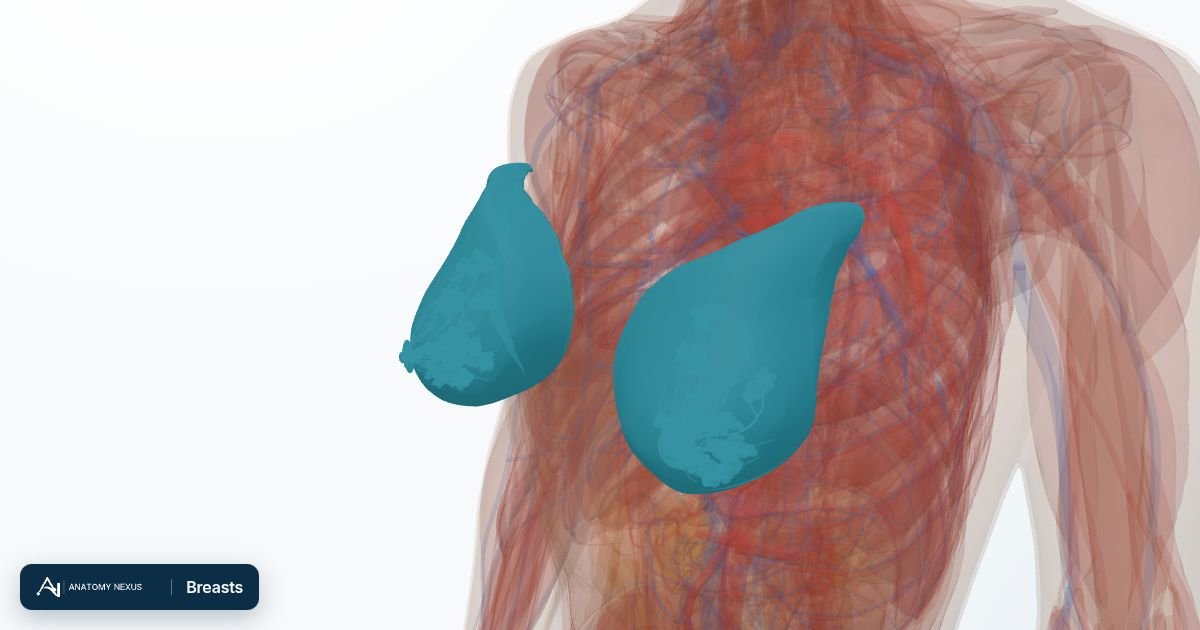
Open in the 3D explorerBreasts anatomy
3D model of the Breasts in the Anatomy Nexus anatomy atlas
Interactive 3D model: Breasts. Orbit, zoom and click the structures.Load the 3D model

Common causes

FibroadenomaA smooth, firm, rubbery lump that moves easily under the fingers, most common in teenagers and women in their twenties and thirties; benign, and often simply monitored once confirmed.
Breast cystA fluid-filled sac that can appear quickly, feel smooth and tense or tender, and vary with the cycle; most common from the forties up to the menopause. Ultrasound confirms it and draining it with a needle relieves it.
Fibrocystic changeGeneralised lumpiness or ropiness, often in the upper outer part of the breast, tender in the days before a period and settling afterwards; a normal variation rather than a disease.
Mastitis and breast abscessInfection, most often during breastfeeding, causing a hot, red, painful, swollen area with fever; an abscess forms a tender, fluctuant lump that needs draining.
Fat necrosis and lipomaA firm lump after a knock, injury or surgery to the breast (fat necrosis) can mimic cancer and needs imaging to confirm; a lipoma is a soft, benign lump of fatty tissue.

Less common causes

Breast cancerTypically a hard, irregular, painless lump that feels fixed to the surrounding tissue, sometimes with skin dimpling, a newly inverted nipple, nipple discharge or a lump in the armpit. Risk rises steeply with age; it is rare in men but does occur.
Phyllodes tumourAn uncommon, often fast-growing lump that resembles a fibroadenoma; most are benign, but they can recur or occasionally be malignant, so they are removed.
Gynaecomastia in menEnlargement of the glandular tissue behind the nipple, usually on both sides and sometimes tender, common at puberty and in older age; it may follow hormone changes, liver disease or medicines. A firm one-sided lump away from the nipple is assessed for cancer.
Lumps after gender-affirming careTrans women on oestrogen develop breast tissue and can form the same benign and malignant lumps as cisgender women; trans men who have had chest masculinisation surgery keep a thin layer of breast tissue, so a lump on the chest wall still needs assessment. Breast screening invitations depend on how a person is registered with their GP: trans women who have been on gender-affirming hormones for several years and trans men who have not had chest surgery are eligible, and may need to ask to be invited. A new lump is assessed in the same way in everyone and should not wait for screening.

Often occurs with

Conditions to read about

How it is investigated

Educational content. This page explains what a symptom can mean so that the anatomy and the medical reasoning make sense. It cannot tell you what is causing yours: only a clinician who can examine you and order tests can do that.