



Neurons
The nerve cell: a body with branching dendrites that receive signals and a single axon that carries them onward, sometimes for a metre.
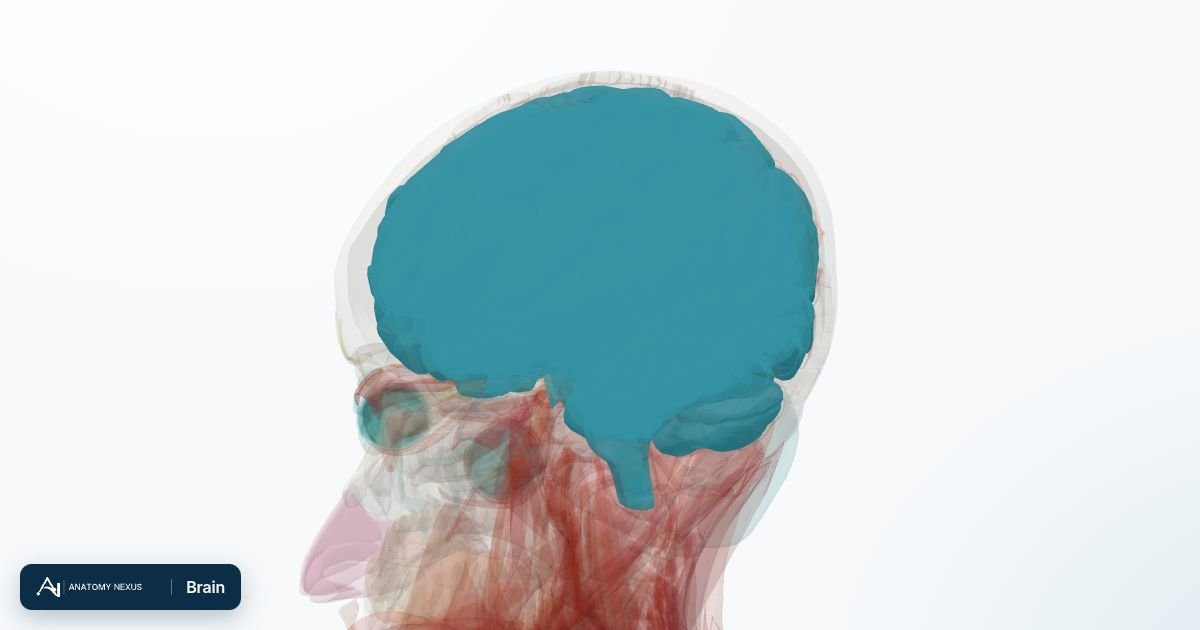
The brain holds about 86 billion neurons, each connected to thousands of others through synapses. Dendrites collect incoming signals; if their sum crosses a threshold at the axon hillock, the neuron fires an all-or-nothing action potential down its axon. Axons are wrapped in myelin, a fatty insulation that lets the impulse jump between gaps and travel up to 120 metres per second.
Neurons communicate chemically: an arriving impulse releases a neurotransmitter such as glutamate, GABA, dopamine or acetylcholine into the synaptic gap, and the receiving cell is excited or inhibited depending on its receptors. Most drugs acting on the nervous system change this step.
Glial cells outnumber neurons and feed, insulate and protect them. Unlike most cells, adult neurons rarely divide, which is why injury to the brain and spinal cord is so hard to repair.
Key facts
| Fact | Value |
|---|---|
| Neurons in the brain | ≈86 billion |
| Fastest conduction | ≈120 m/s |
| Resting membrane potential | ≈ −70 mV |