



Brain functions
Different regions specialise: the cortex for perception, movement, language and thought; deep nuclei for movement and emotion; the brainstem for life support; the cerebellum for coordination.
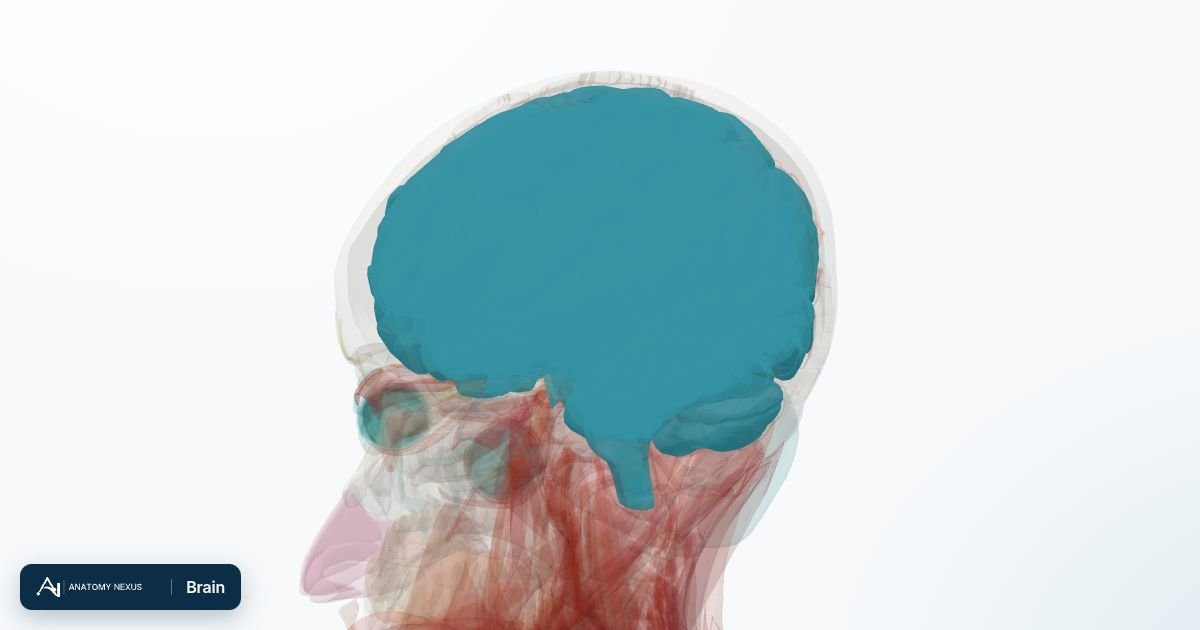
The frontal lobe plans, decides and, through the precentral gyrus, commands movement; Broca's area in the left inferior frontal gyrus produces speech. The parietal lobe handles touch and space, the temporal lobe hearing, memory and language comprehension (Wernicke's area), and the occipital lobe vision. The insula senses the body's internal state.
Beneath the cortex, the basal ganglia select and smooth movements, the thalamus relays almost every signal to the cortex, the hypothalamus runs hormones, temperature, hunger and sleep, and the hippocampus lays down new memories. The brainstem keeps breathing and the heart going and houses the cranial nerve nuclei; the cerebellum times and coordinates movement.
Because functions are localised, the pattern of a deficit locates a lesion: right-sided weakness with lost speech points to the left middle cerebral artery territory, unsteadiness to the cerebellum, and memory loss with preserved alertness to the medial temporal lobes.
Key facts
| Fact | Value |
|---|---|
| Brain mass | ≈1.4 kg |
| Share of resting energy use | ≈20% |
| Cranial nerves | 12 pairs |