



Glomerular filtration
Blood pressure forces water and small solutes out of the glomerular capillaries into the nephron, about 180 litres a day, while cells and proteins stay behind.
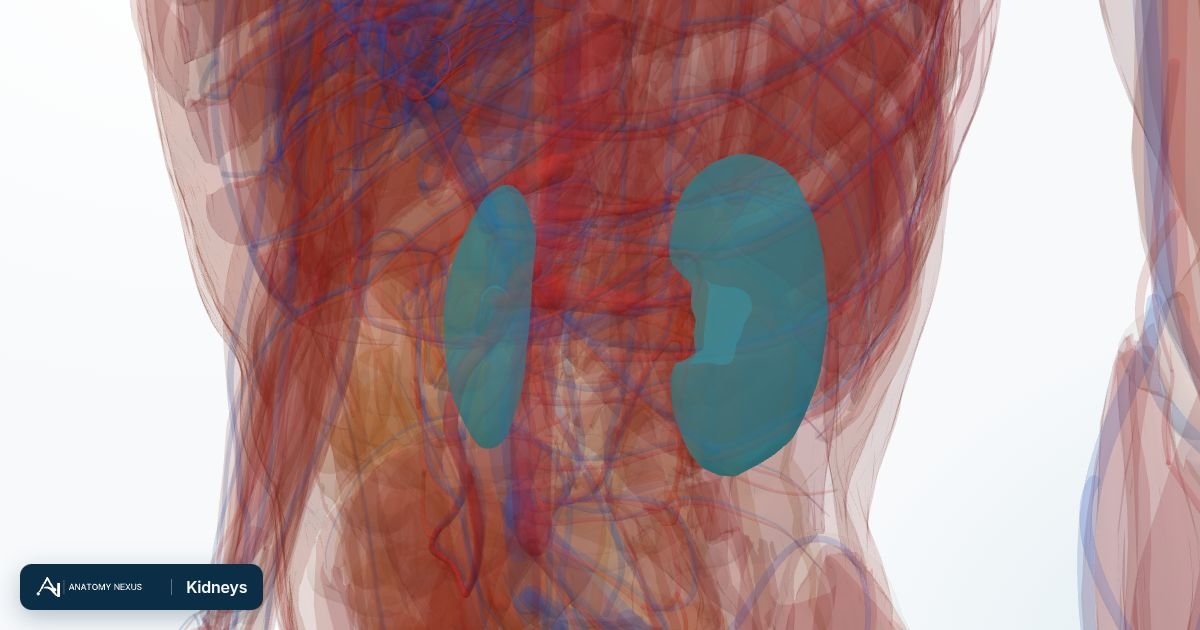
Each kidney holds about a million nephrons. In the glomerulus a tuft of leaky capillaries sits inside Bowman's capsule; the pressure difference drives an ultrafiltrate of plasma through a three-layer sieve that blocks cells and almost all protein. The glomerular filtration rate (GFR), roughly 120 ml per minute in a healthy young adult, is the standard measure of kidney function.
The kidney keeps GFR steady across a wide range of blood pressures by adjusting its afferent and efferent arterioles; drugs that act on these vessels (NSAIDs, ACE inhibitors) can drop filtration in a dehydrated patient.
Because creatinine is filtered freely and barely reabsorbed, its blood level rises as GFR falls, which is how kidney disease is staged. Protein in the urine means the sieve is damaged.
Key facts
| Fact | Value |
|---|---|
| Filtrate per day | ≈180 L |
| Normal GFR | ≈90–120 ml/min |
| Nephrons per kidney | ≈1 million |