



Absorption
Nutrients cross the lining of the small intestine into blood and lymph; the colon reclaims water and salts.
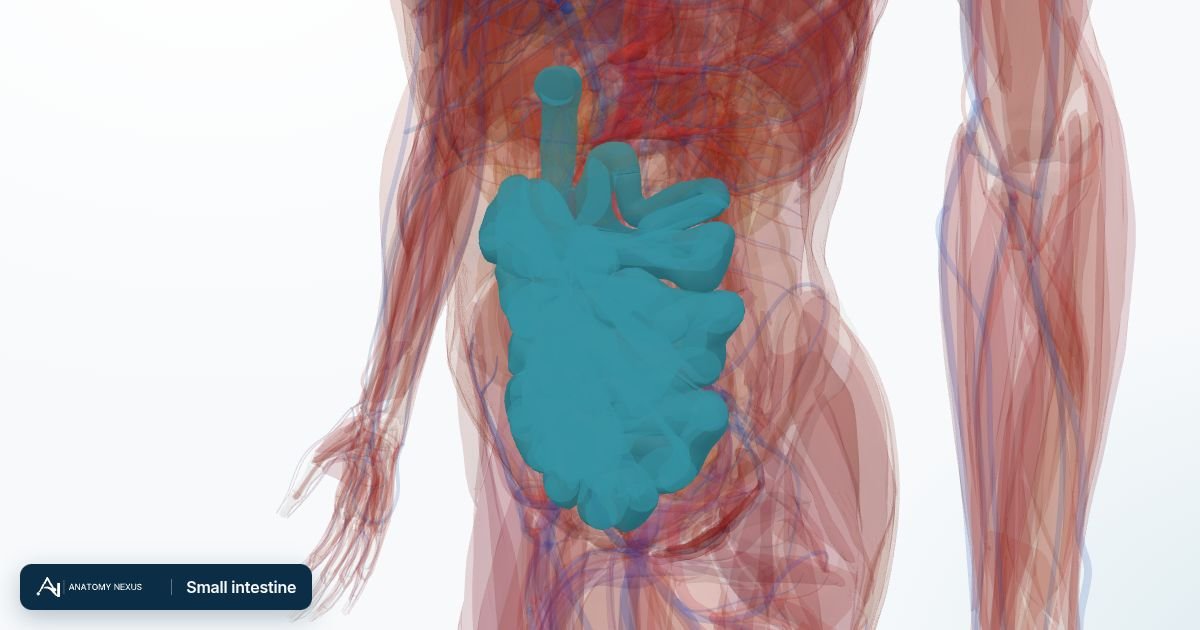
The small intestine's folds, finger-like villi and microscopic microvilli multiply its surface area to around 30 square metres. Sugars and amino acids are pumped into the cells and pass into capillaries that drain to the portal vein and the liver. Fats are rebuilt inside the cells into chylomicrons and enter the lymphatic lacteals, bypassing the liver at first.
Iron and calcium are absorbed mainly in the duodenum, most other nutrients in the jejunum, and vitamin B12 and bile salts only in the terminal ileum, which is why disease or surgery there causes specific deficiencies.
About nine litres of fluid enter the gut daily (drink plus secretions); the small intestine absorbs most and the colon nearly all the rest, leaving about 100 ml in stool. Diarrhoea is a failure of this reclamation.
Key facts
| Fact | Value |
|---|---|
| Small intestine surface | ≈30 m² |
| Fluid entering gut daily | ≈9 L |
| Water lost in stool | ≈100 ml/day |